
Apache trout, a national broadcast, and the river that said, “Not today.”
BY TIM HUCKABY
| I was headed to southern New Mexico for five days of business and four brutally long days working a live golf broadcast. I could have flown. Instead, I built the drive around something I needed just as much: dry fly fishing for two trout species I had not ever had a chance to catch. |
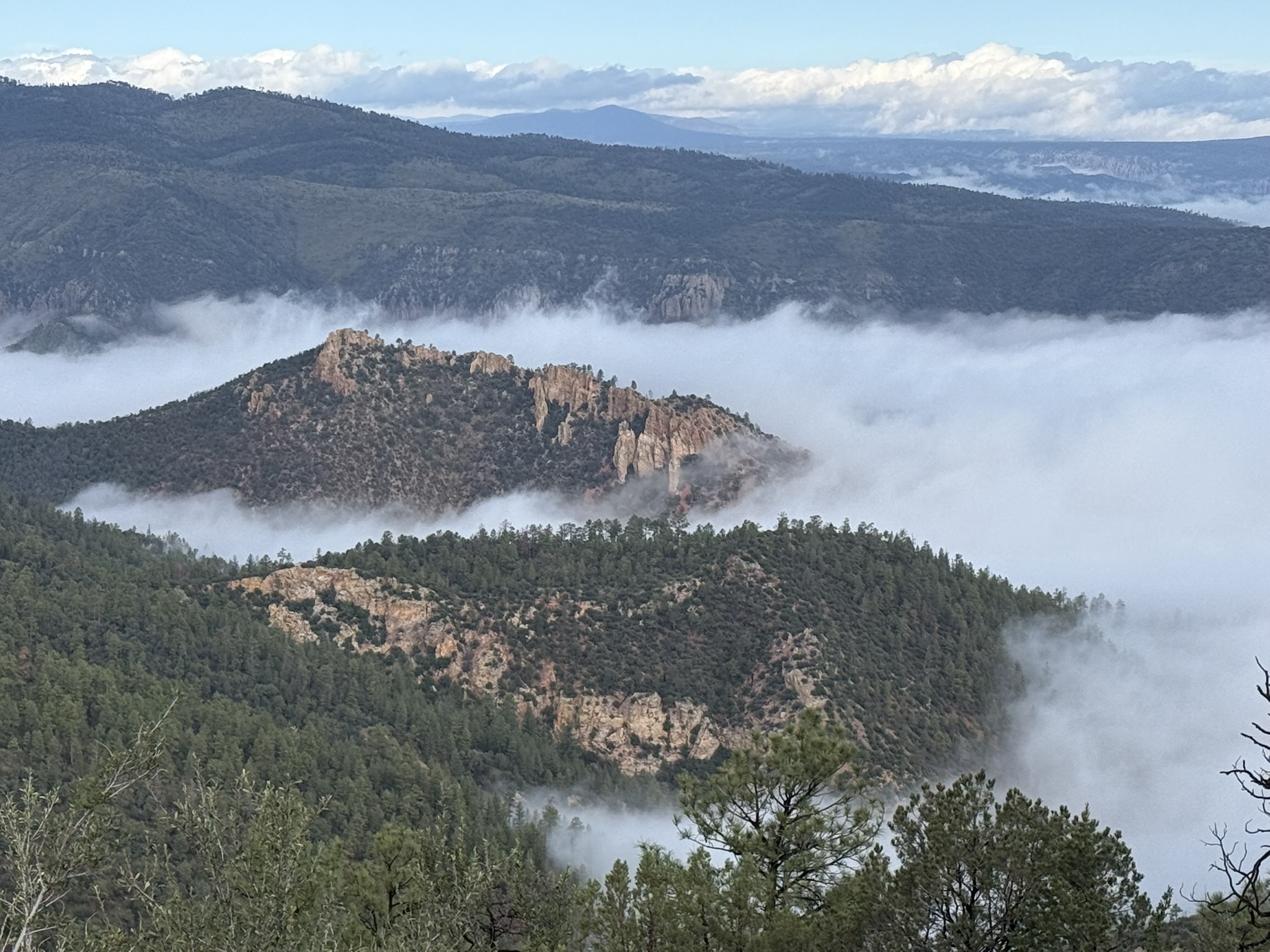
This picture will give you a hint of where I wasn’t; by the rock formations
I Wanted to Fly Fish My Way There
I was on a five-day business trip to the tiny town of Elephant Butte in southwestern New Mexico. I didn’t want to fly. I wanted to fly fish my way there and fly fish my way back.
I love a big drive, but I prefer to keep any single day under ten hours. So I broke the trip into two days on the front end and two days on the back. That plan gave me an evening fishing window and two or three hours the next morning in both directions. The return trip mattered most because I knew what was waiting for me in New Mexico: four stressful, eighteen-hour days working the live broadcast of a PGA Sectional golf tournament.
The software I had built was going to be an integral part of that broadcast. More than that, it was going to help make golf-broadcast history. I knew I would arrive focused, stay switched on for days, and leave mentally baked. Fishing on the way there sounded fun. Camping and fishing alone on the way home, with time to decompress, sounded smart.
I decided I would stop somewhere on the way up and somewhere different on the way back. I asked Microsoft Copilot for fly-fishing destinations sort of near my route where I could camp, either in a public campground or dispersed.
And here is where the story gets interesting. Where I ended up, and how well I did, surprised me. I am going to let you guess where I was on my journey there, then tell you at the end.
First Hint: Pronghorn
I started in the desert and gradually gained elevation. That is your first clue. I live in Carlsbad, California, and I was headed toward a destination that could be reached in roughly a ten-hour day.
At around 6,000 feet, driving a beautifully paved single-lane mountain road with the window open, I looked to the side and saw a group of pronghorn. I said out loud, “Oh man, that’s pretty cool,” and kept going.
If you know fly fishing in the West, you may already be thinking Montana. Maybe Ennis, then north from there.
Not a bad guess. But no.
Second Hint: The Forest and the Deer
Near 7,000 feet, the country changed again. Pines and spruce covered the mountains, with scattered groups of aspen here and there. It was beautiful.
Then I started seeing deer. It was early afternoon, not the normal witching hour when I would expect them to be moving. That struck me as odd, but it also told me to slow down. The last thing I needed at the beginning of this trip was for HUKTRUK to plow into a deer.
Now you might be thinking Wyoming, perhaps somewhere on the way toward Jackson.
Nope.
Third Hint: Bighorn Sheep
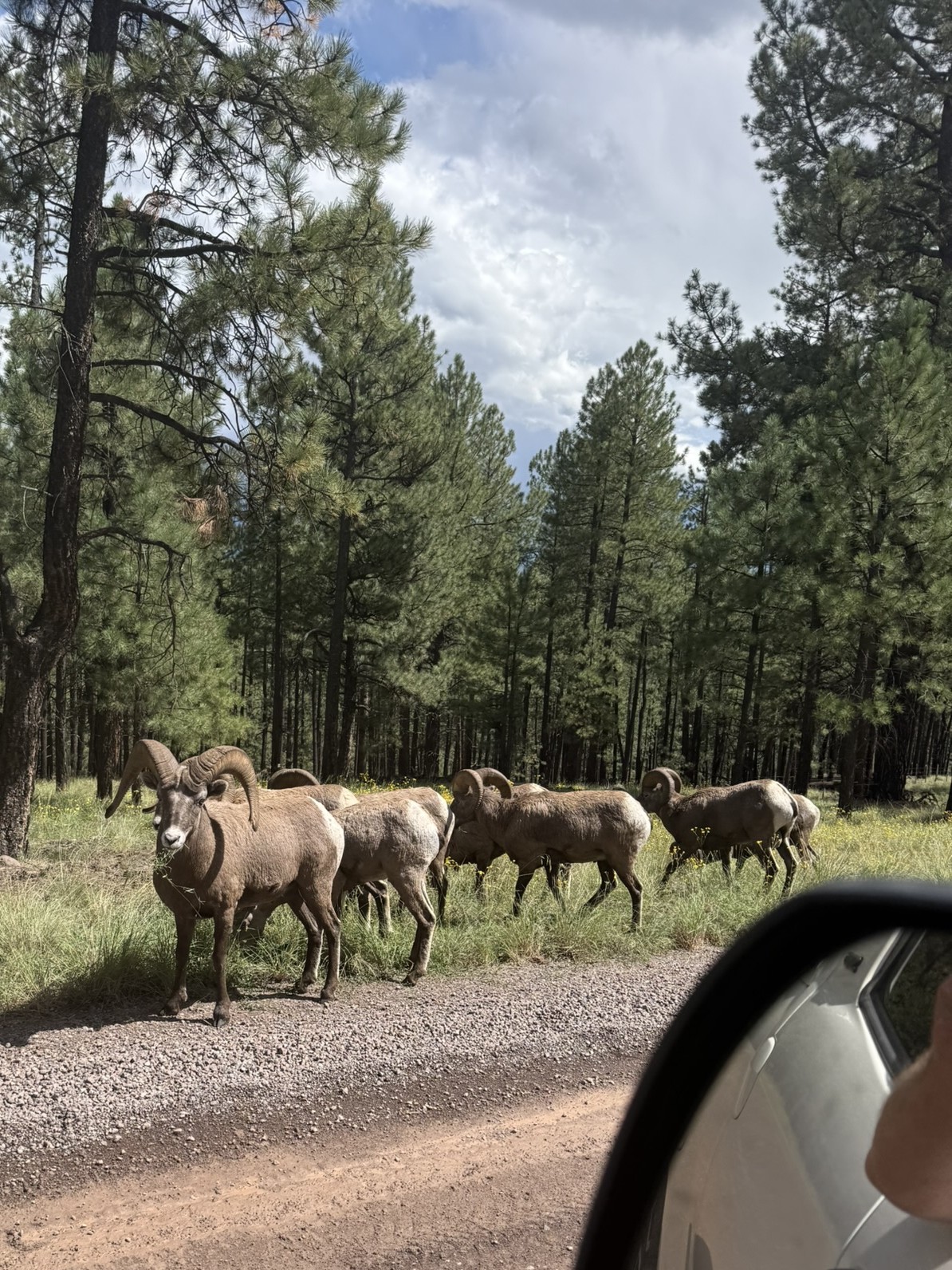
About half a mile ahead, I saw a group of animals beside the road. At first I assumed they were cows. As I got closer, I said out loud to no one, “You have got to be kidding me.”
They were bighorn sheep. I do not know enough about them to tell the difference between males and females, but every one of them had the unmistakable curled horns. I stopped within about ten feet, rolled down the window, took pictures, and talked to them because apparently that is what I do when I encounter bighorn sheep beside a mountain road.
They were unconcerned. They kept eating the abundance of yellow flowers that made the drive even more spectacular.
Now perhaps you are thinking Colorado, somewhere near Interstate 70 on the way to South Park.
Still wrong.
Thirty Miles of Dirt
I had lost cellular service more than an hour earlier. This is precisely why I keep a real Garmin GPS in HUKTRUK. The route told me to turn, the pavement ended, and I still had about thirty miles to go on dirt.
The road was well maintained. Four-wheel drive was not necessary, but the distance made it clear I was going somewhere remote. The entire way through the forest was one of the most beautiful drives I have made.
I had also crossed the Continental Divide earlier. There is another clue for you.
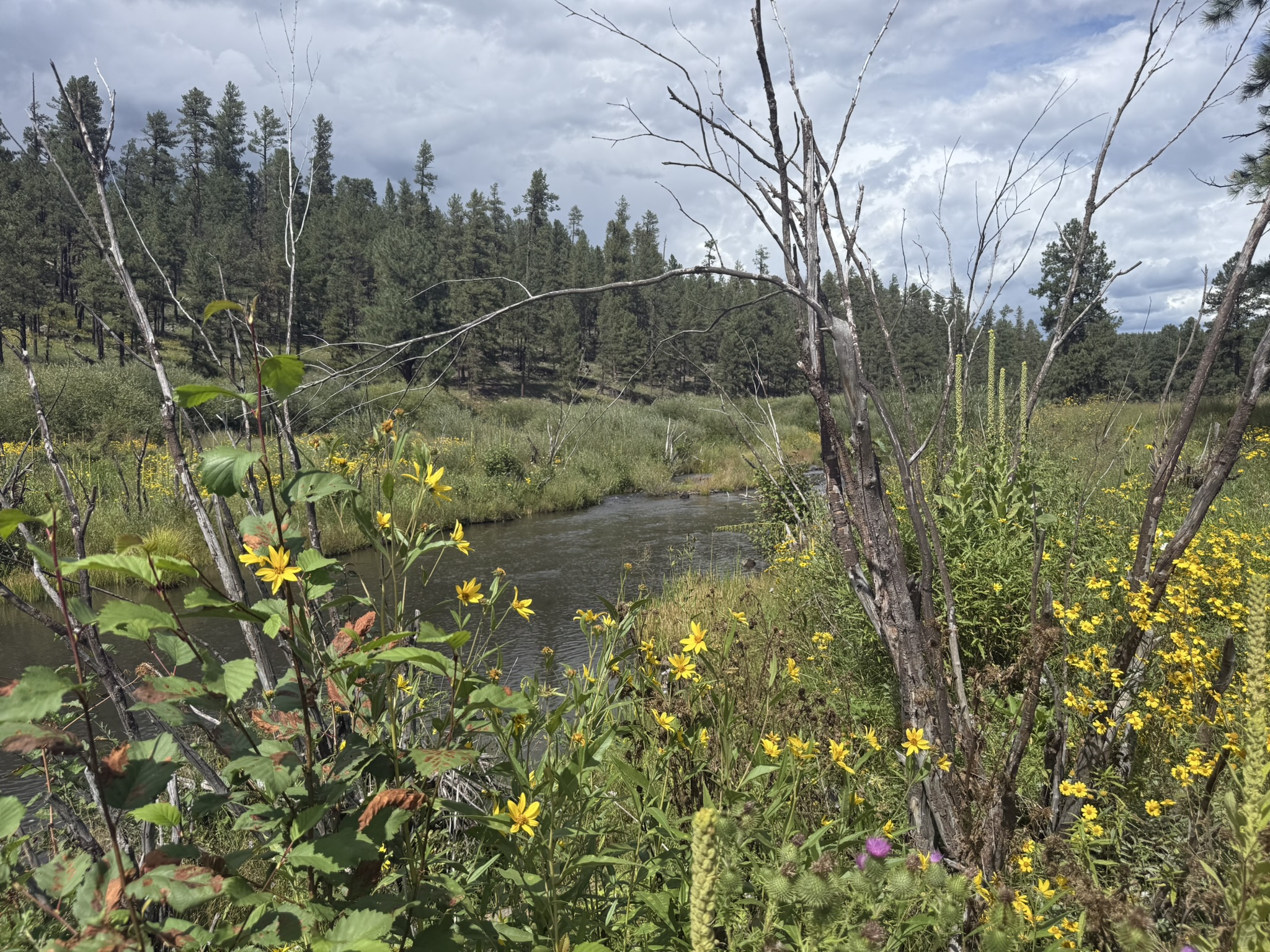
When I finally got close to the campground, I crossed a bridge and looked down at the river. Honestly, I was disappointed. The water looked silty, froggy, and colored; not fishable at all. I told myself, “No big deal. I’m only here for about eighteen hours. Sometimes that’s how it goes.”
But I was a little bummed. I was hoping to find a unique native trout species I had never caught before.
Is This River Really Fishable Right Now?
I drove the muddy, rutted road toward the campsites and encountered the only other people in the campground. They were carrying fly rods.
I slowed down and rolled down the passenger window. “Nice campground. Have you guys been fishing?”
They were just heading out. I explained that I was new to the place and asked whether they had any guidance. They did not. In fact, they asked me to report back if I figured it out.
I told them I would. They appeared to be headed downstream, so I said I would go the other way and stay out of their water.
Another clue: I had never been to this place, never fished this river, and never even heard of the river until that Copilot research.
Hoppers Everywhere
I had my choice of more than twenty campsites. I picked one directly beside the river, shut off the truck, and walked straight to the water before unloading anything.
Grasshoppers scattered in front of every step I took. They ranged from big old size-two battleships to tiny size-fourteens.
“Hmmm.”
I stopped and scanned the river slowly, a full 180 degrees upstream and downstream. I saw no heads, no bugs, and not much clarity, perhaps a foot at most. The riverbed looked like the sort of silt where a step could swallow you in mud above the knee. Alone, that could become dangerous quickly. I love fishing alone, but over the years I have learned to be much safer when I do.
It was called a river, but it looked more like a creek. About a hundred feet upstream, though, I could see stronger current. Two hundred feet up, the water looked genuinely good. There were deep channels and undercut banks.
“Hmmm.”
The Rod, the Fly, and Low Expectations
I walked back to HUKTRUK and unloaded my camping gear. I sleep on a proper bed with sheets in the back, and I did not want to deal with getting all the camping stuff out of the way after dark.
I was still convinced I would fish for an hour, get no strikes, then make a couple of Jack Daniel’s Cloudys, my go-to mix of JD, club soda, and a splash of Coke, and go to bed early.
I rigged at the back of the truck, which I normally do not do. I usually wait until I am standing beside the water to figure out what is happening. This time I already had the most obvious piece of intelligence I needed: hoppers.
My rod was a fiberglass CTS five-weight that I had built a few months earlier. A three-weight might have been a better choice, and I had one with me. But I love the accuracy of fiberglass. The river was not so heavily forested that I could not make a backcast, and this looked like a place where precise placement would matter.
I tied on a size 12 black Huck hopper.
I was at roughly 9,000 feet. That is another hint. Black Huck hoppers in size 12 seem always to work in the mountains because they imitate so many different insects that belong there.
Whack!
I walked about fifty feet to the river from the campsite and performed the same slow scan in both directions.
“No heads. No bugs. I won’t be fishing long.”
I pulled a little line from the reel and made one of those short twenty-foot flick casts just to get line out. I was not even standing in the river. I was still on the bank.
Whack!
Of course, I was not expecting it, so I completely farmed the fish. But I saw it. It was only six or eight inches long.
“Hmmm. This might be fun.”
I pulled out more line and made a poor cast. This was technical little water, the kind where the fly needed to land inside a two-foot window and immediately drift correctly. My next cast was better, though still not where I wanted it.
Whack!
I farmed that one too. It was tiny, but now I was laughing. “Holy cow. This could be fun.”
I moved upstream into better water. The strikes kept coming. I hooked fish that felt surprisingly substantial, then lost them. Naturally, I blamed the barbless hooks. It was probably my fault, but barbless hooks make a convenient excuse.
A Thirty-Year-Old Ant
I still had not stepped into the river. While moving upstream along the bank, I looked down and noticed huge black ants crawling through the vegetation.
“Hmmm.”
I changed to a double-dry rig. About eighteen inches behind the size 12 black Huck hopper, I tied on a foam ant imitation I had made perhaps thirty years earlier and rarely used.
I cast again.
Whack!
The fish ate the foam ant. This one was not tiny. It headed for the logs, and I had to make a decision immediately. I was fishing 5X. I had to pull the fish away from the logs without breaking it off.
Thankfully it stayed connected. I landed a rainbow of about fourteen inches.
I had been fishing for perhaps fifteen minutes. “This is going to be awesome.”
“Have You Ever Done This Before?”
After thirty minutes, I still had not traveled a hundred feet to the water that had originally looked best. I had landed only one fish despite perhaps ten takes. Some were too small to get the fly into their mouths, but I had also simply spazzed on several good opportunities.
I finally started giving myself the business.
“Holy shit, you dumbass. Have you ever done this before?”
Then I moved into the genuinely good water with the double dry still tied on. I will spare you every take and every drift. I probably railed six fish in twenty minutes before exhausting the run.
And I landed several examples of the native species I had come hoping to find.
Mission accomplished.
“Holy cow. This is a hoot of fun!”
Worse Weather, Better Fishing
I still had not entered the river. I intended to wet wade, but the lack of visibility and the silt made me cautious even with my fancy new Spy Polarized Fly Fishing sunglasses. Instead, I bushwhacked around bends through wet, heavy vegetation.
I had forgotten to mention that light rain began almost as soon as I reached the water. The ground showed clear evidence of harder rain earlier.
Experienced fly fishers understand the trade. If you are willing to accept the misery, dry-fly fishing in the rain can be epically good. Raindrops disturb the surface and make it harder for flying predators to see trout from above. The fish often become more willing to rise.
The rain intensified. So did the fishing.
I caught browns, chubs, rainbows, and the special native trout. That native fish resembled a cutthroat, yet it had no red slash under the jaw.
Now the chubs may have destroyed your geographical theory. Where was I?
The Fish Under the Bank
I moved another twenty feet upstream and saw a deep run beneath an overhanging bank. I knew a fish had to be there. Reaching it meant risking both flies in the brush on the far side.
My first cast was not good enough. It did not come close enough to tracking through the undercut, much less drifting naturally. In my defense, the wind had joined the rain.
The next cast landed exactly where I needed it. I made an upstream mend the instant the flies touched the water. The double dry entered the strike zone.
Whack!
I saw the fish. It was big, at least for this creek, and it had taken the Huck hopper.
The fish ran downstream toward a tangle of trees and sticks. I had to manhandle it away while thinking, “I’m going to snap this fish off.” The earlier decision to use 5X suddenly looked like a dumb idea.
I coerced the fish back upstream, where it had to fight the current. I pulled left, then right, trying to tire it efficiently. Another problem became obvious: I didn’t bring a net. Where was I going to land it?
This fish was worth entering the river for the first time because I did not want to drag it onto a dry bank. I also worried about the second dry fly. On a tandem rig, an unhooked trailing fly can catch the leader during the fight and lever the front hook out of the fish’s mouth.
But I landed it.
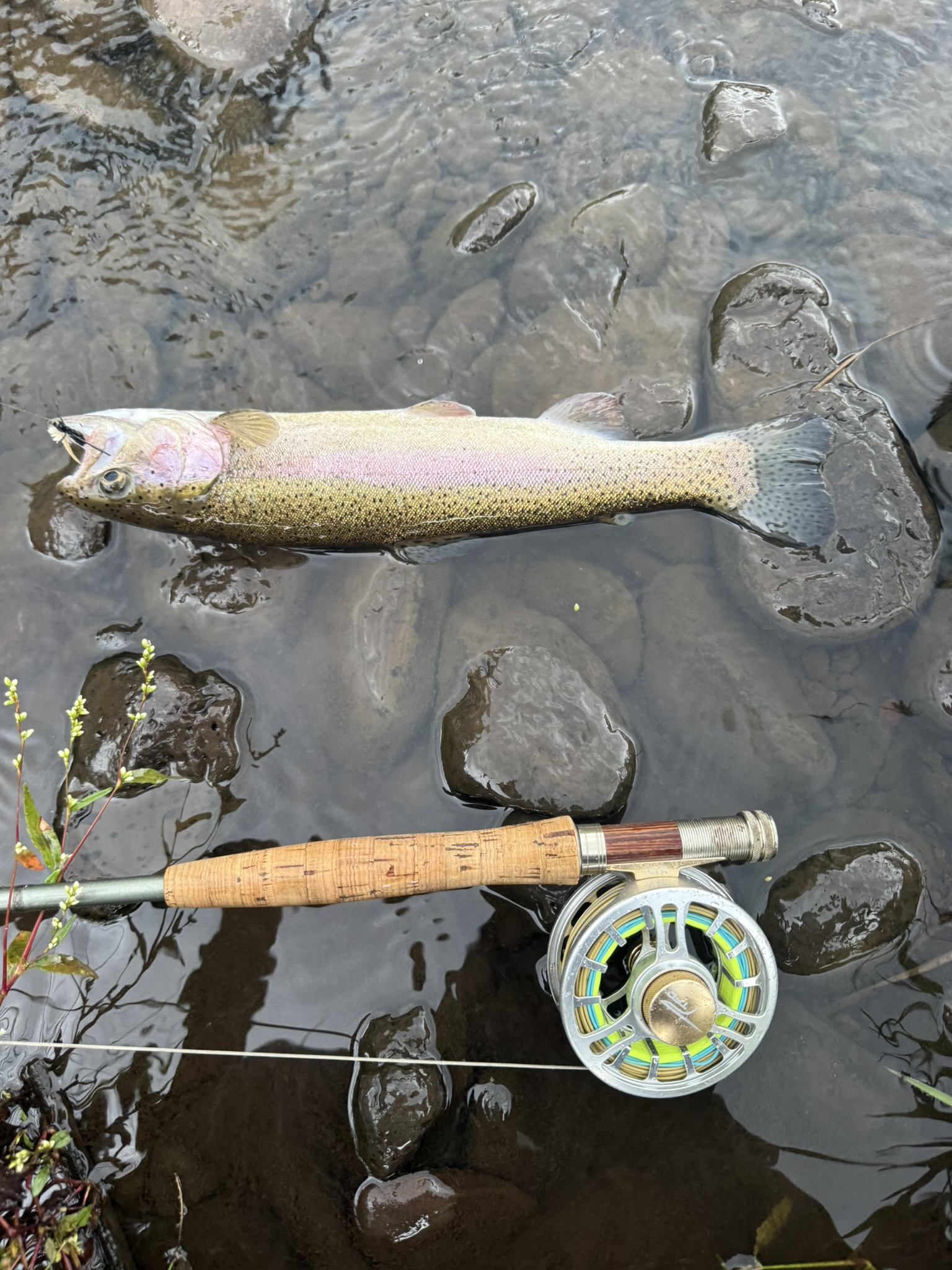
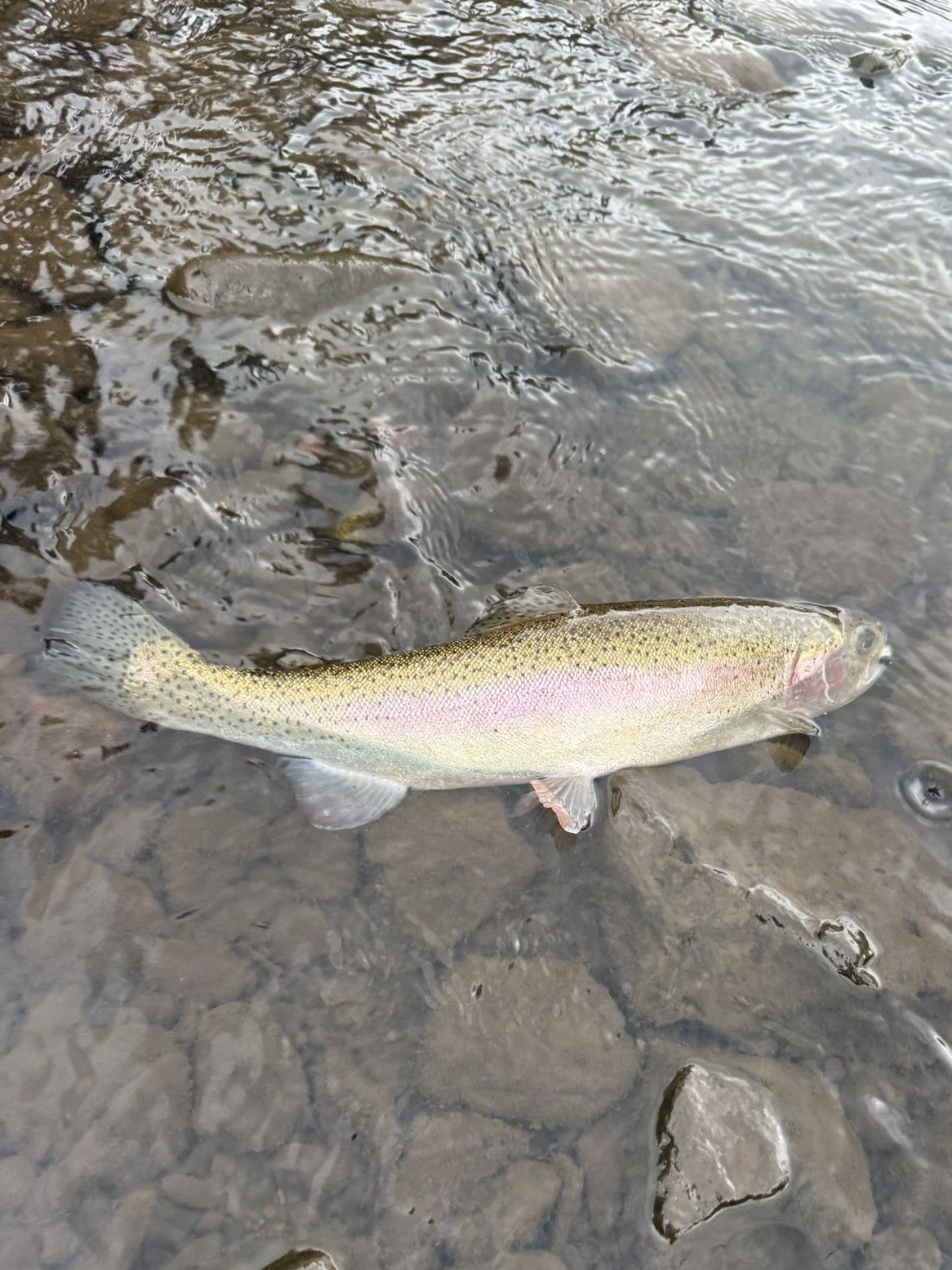
The larger rainbow after the difficult cast beneath the overhanging bank. The photograph was secondary to a quick release.
One Bad Picture Was Enough
I wanted one quick picture because nobody was going to believe me. I found a narrow strip of gravel covered by a little water and briefly settled the fish there.
I hated doing even that. I am a guide, and I get fish in quickly. I do not fight them to the brink of exhaustion. But the fish began flopping, which made me regret trying to get the picture immediately.
Then I discovered another problem: iPhone touchscreens do not cooperate when wet. I managed a few imperfect pictures, kept the encounter short, and released the fish in the water.
I knew it was fine because it shot back into the deeper current, pissed off that I had fooled it.
“Holy shit. This is fun!”
The Answer
I kept moving upstream and catching fish for roughly another hour. Eventually the rain became too heavy and lightning moved too close for comfort.
Soaking wet and cold, I walked perhaps only a third of a mile back to the truck to solve the next problem: dinner in the rain, followed by sleep.
Where was I?
Arizona.
I am not kidding. Arizona. I was in the Apache National Forest on the East Fork of the Black River, close to the New Mexico border. Who knew?
I do not mind naming the location because reaching it requires commitment. It is remote, in the middle of nowhere, and not on the way to much of anything except, in my case, sort of on the way to a tiny town in southern New Mexico and a business trip unlike any I had taken before.
The native trout I had caught were the Apache trout.
My First Apache Trout
I caught a number of Apache trout. The largest was about twelve inches. It was also the only Apache I briefly removed from the water.
I put it on a soft patch of wet grass, made a quick identification photograph, and returned the fish immediately. The other Apache trout remained in the stream throughout their releases.
I tried to take quick pictures of a few larger rainbows and browns in the water, but failed. They were wild fish that simply would not quit. I believed they were stocked fish that had held over, though that was my judgment in the moment rather than a verified fact. In every case, the goal was the same: minimize handling and get the fish back into moving water.
The Apache mattered differently. It was not the largest fish of the session. It was my first Apache trout after more than thirty-five years, perhaps forty, of fly fishing. The picture was never meant to be a hero shot. It was a record of a first.
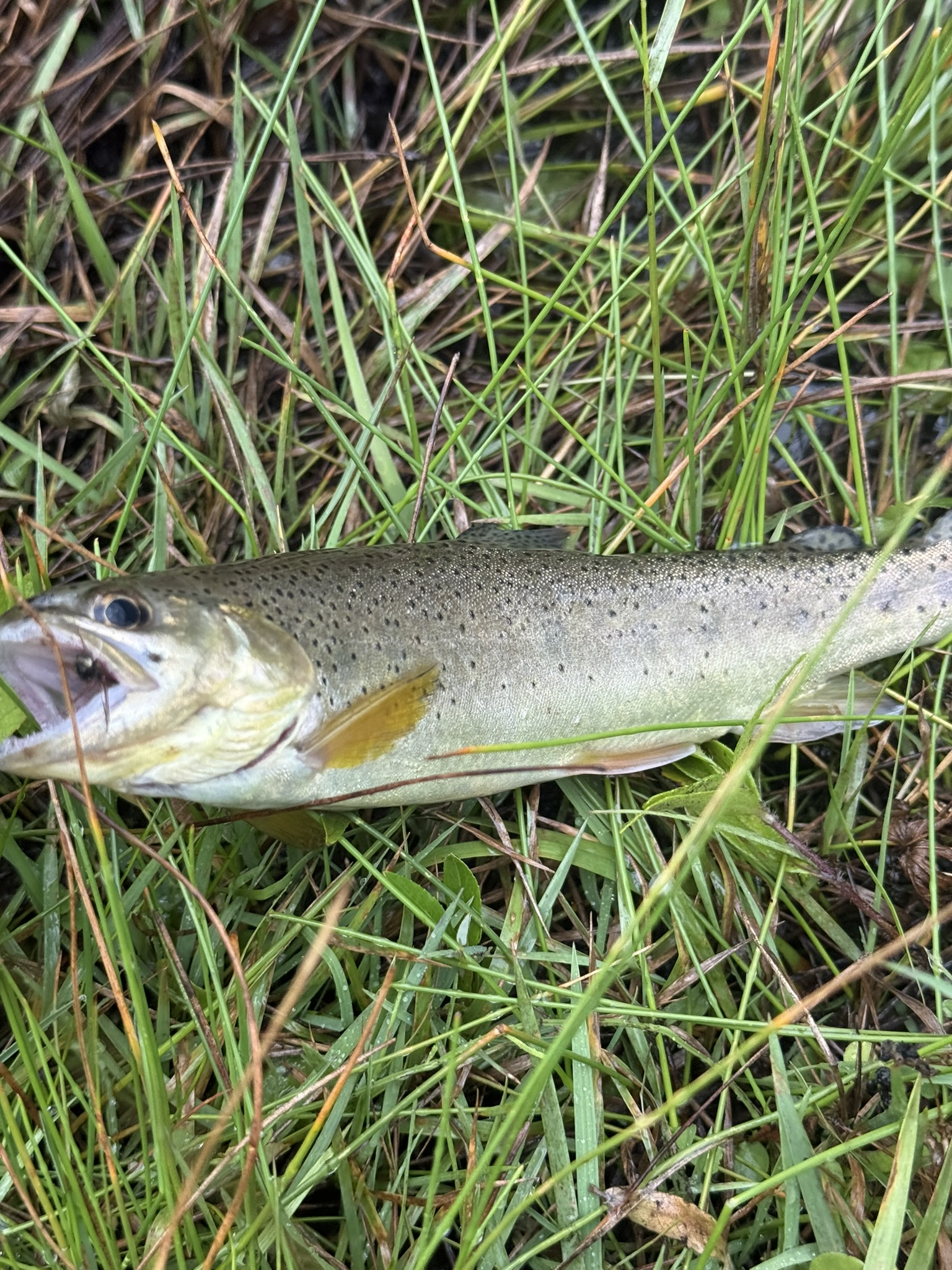
My first Apache trout, approximately twelve inches, photographed quickly on soft, wet grass before release.
From the River to the Broadcast
The next phase of the trip could hardly have been more different. I left the forest and continued toward Elephant Butte, New Mexico, and the temporary broadcast studio at Turtleback Mountain Golf Course.
The New Mexico Open broadcast went well. The long days were every bit as demanding as expected, but the software I built worked perfectly as part of the production, and the event became the milestone I had hoped it would be. Both of the golf broadcasters., Notah Begay III and Ryan Burr said on air, “We have made history today.” According to the post-event media report, coverage generated 1,420 total mentions, approximately 850 million in total reach, just over 2 million estimated views, 4,900 engagements, and an estimated advertising value equivalent of $7.87 million. Much of the social-media reaction was negative because we had bucked the traditions of golf. The naysayers were quick to point out latency and production problems. Those issues occurred elsewhere in the production chain. The software I built responded quickly and ran reliably throughout three days of three-hour broadcasts. The PR folks were ecstatic. I was fairly amused.
That made the decision to drive feel even better. Before the pressure began, I had spent a few hours alone on a remote Arizona stream, catching trout on dry flies in the rain. Somewhere between the hopper takes, the soaked brush, and that first Apache trout, I had stored up exactly the calm I would need.
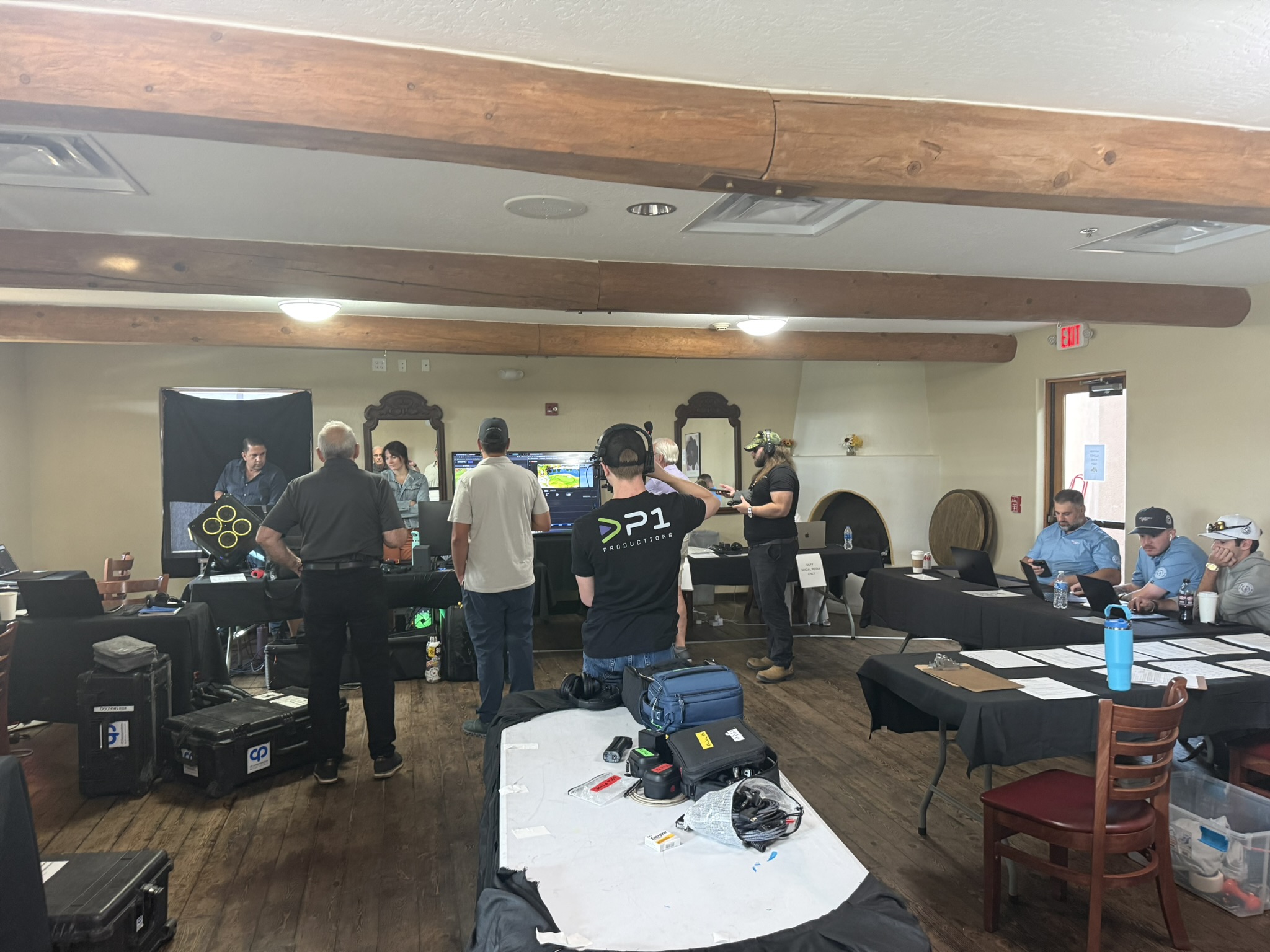
The Broadcast Room
The Wild Native-Trout Double
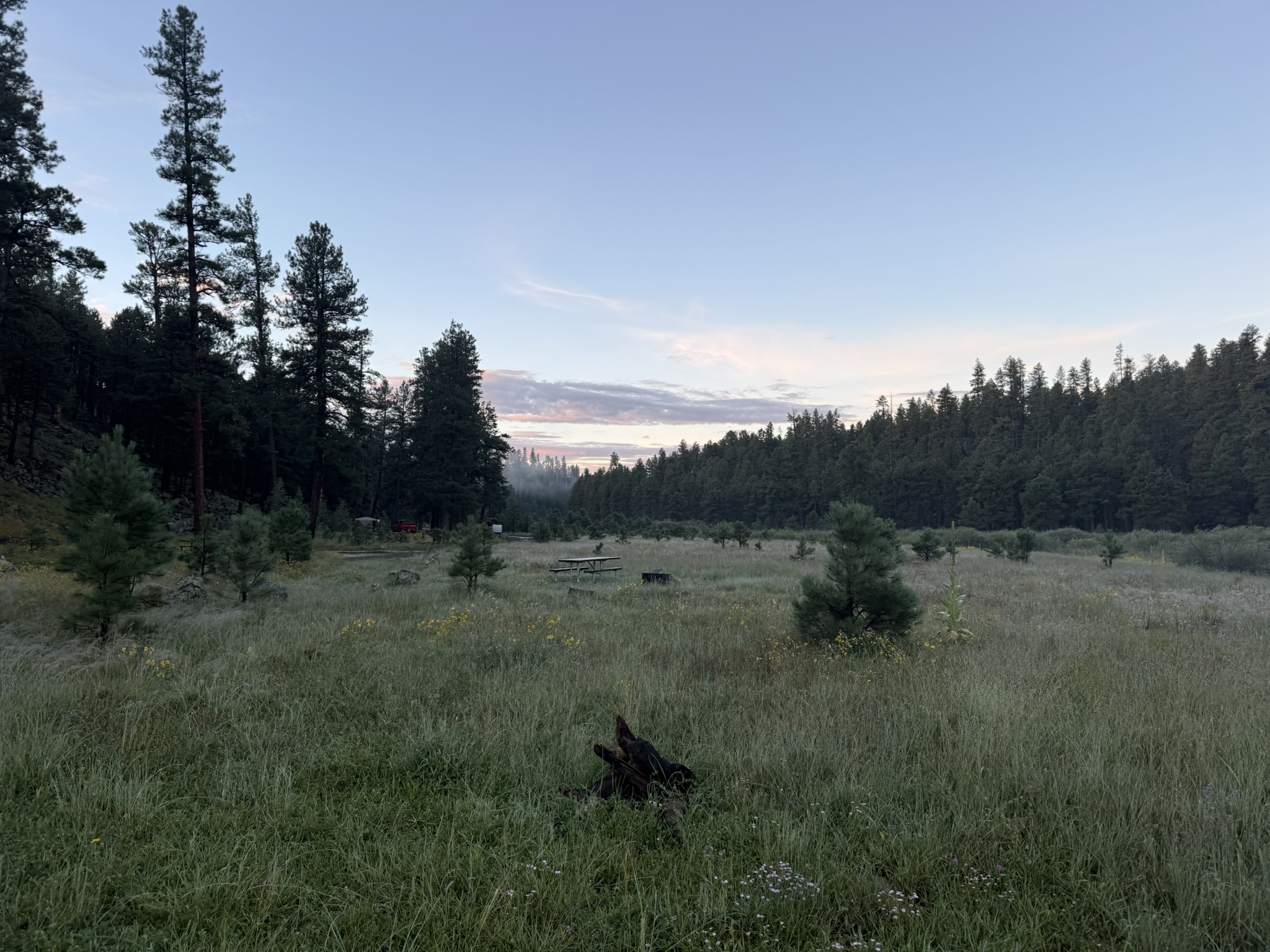
On the drive home, I needed to decompress. I stopped overnight at Forks Campground on the Gila River.
By then I understood that I had caught my first Apache trout on the way to New Mexico. Part two of my wild-native-trout goal was catching my first Gila trout.
I had planned a native-trout double. My Copilot research suggested that the supposedly less-elusive Gila trout would be the easy part.
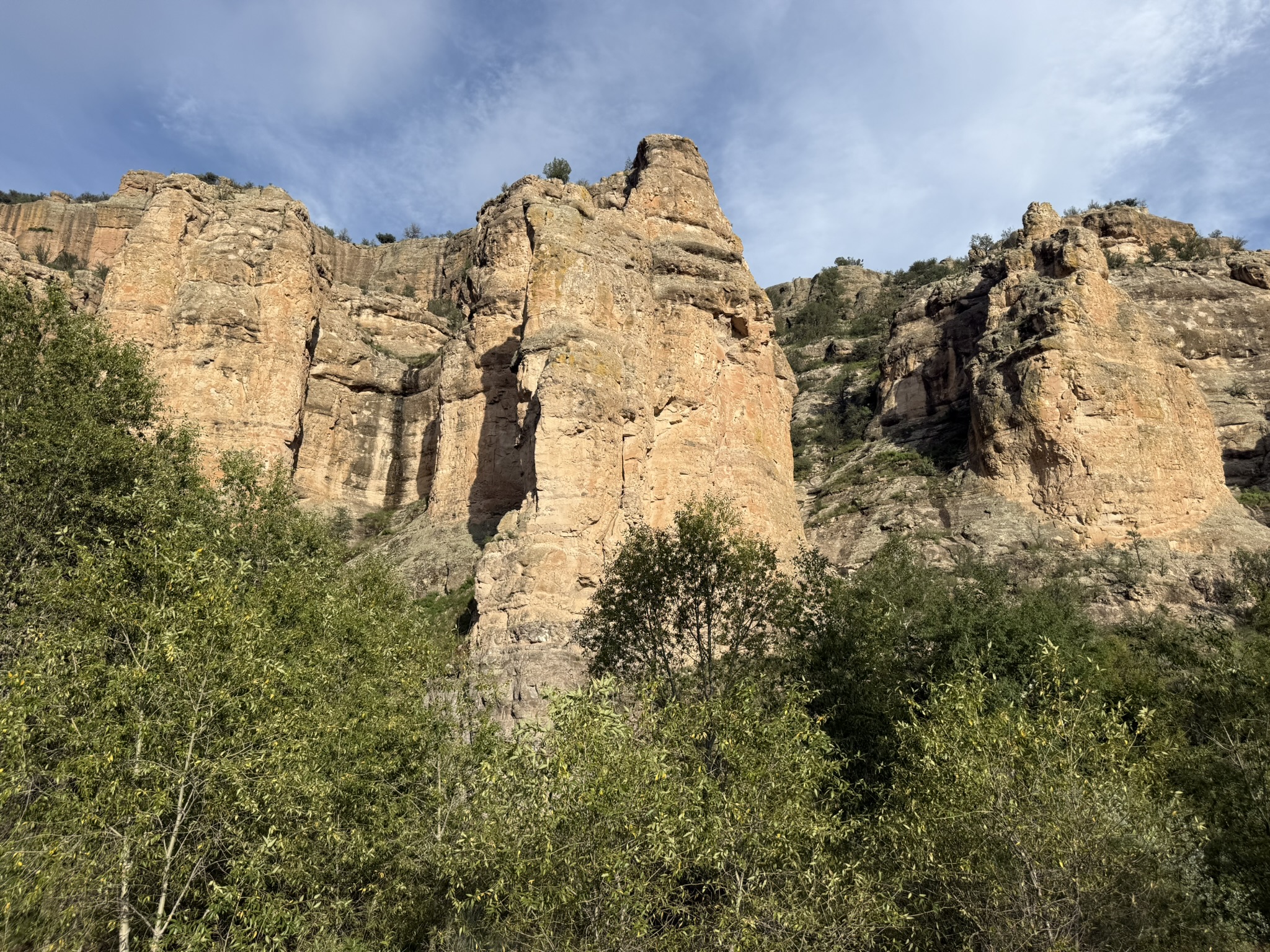
The view from my campsite
Not One Cast
When I reached the Gila, the river was completely blown out by recent rain. It was high, dirty, and raging hard enough to be unsafe.
I hoped it might settle overnight. Instead, rain hammered the campground through the night, and by morning the river was worse.
I did not make one cast.
And that was completely fine.
Experience teaches an angler how to read water, choose a fly, make a cast, and control a drift. Experience also teaches an angler when not to fish. No trout is worth pretending dangerous water is manageable. Besides, during what appeared to be flash flooding, the odds of a trout rising to a dry fly seemed close to zero.
The Gila trout will be there another time. So will I.
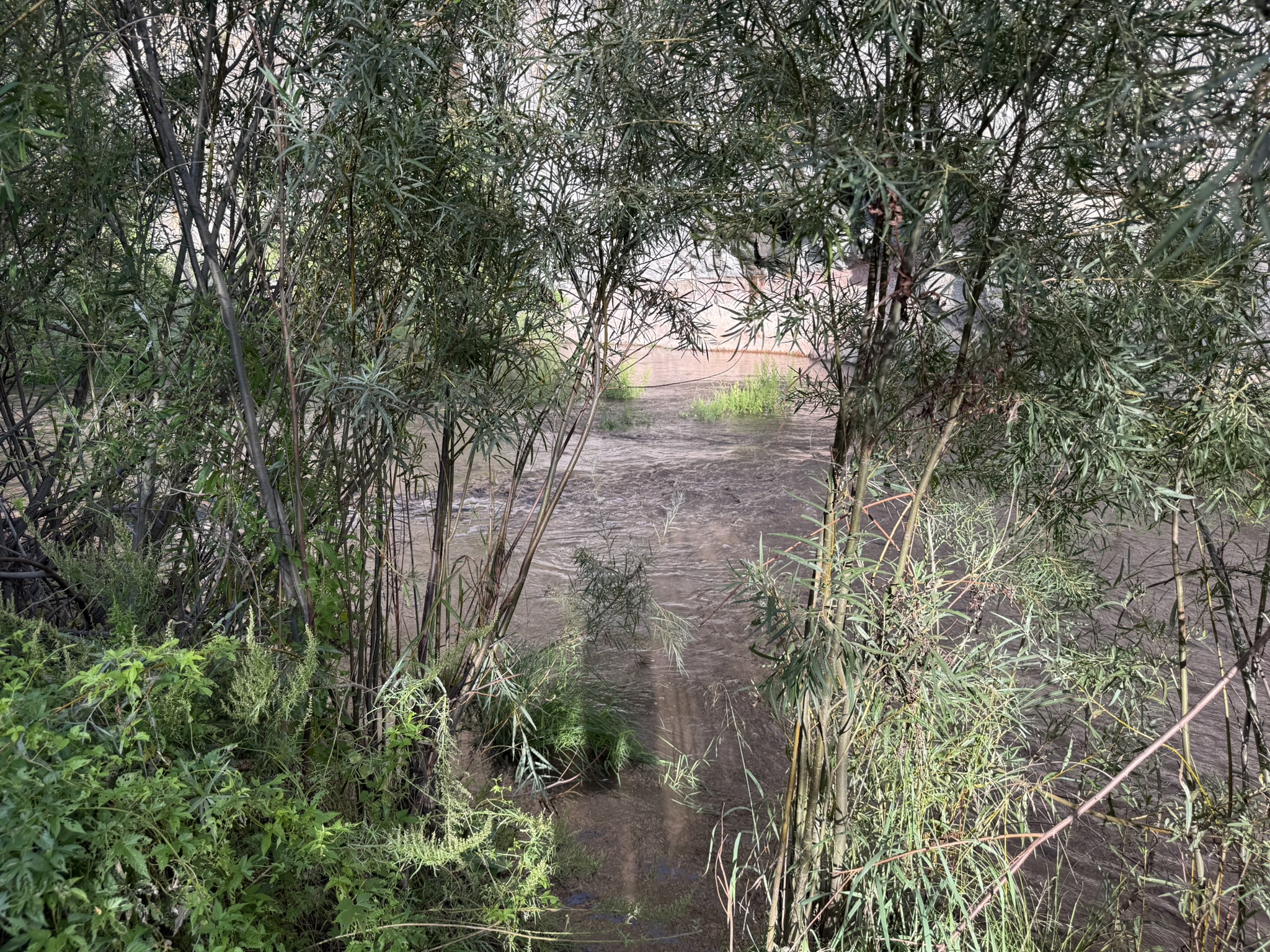
if you look closely you can barely see the river in the background. it’s completely flooded it’s banks along with the river trail
The River Gets a Vote
I came home with a successful broadcast behind me, a first Apache trout in my memory, an unexpectedly excellent dry-fly session, and a night beside a river too powerful to enter.
I did not complete the native-trout double. I did not need to.
The East Fork had said yes. The Gila had said, “Not today.” Both rivers were worth listening to.
The unfinished part may be the best reason to return. I cannot wait.
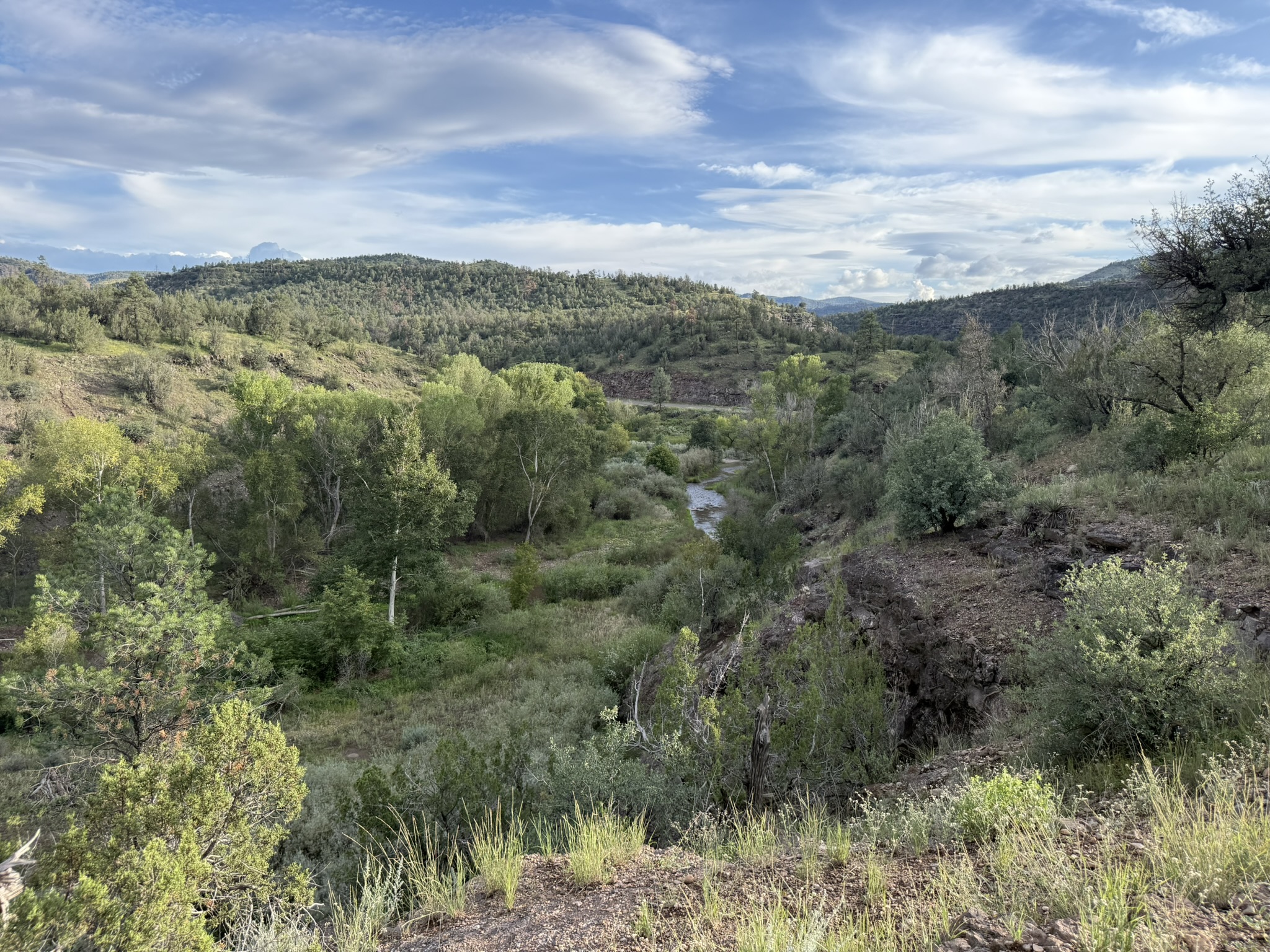
Another view from my campsite at the Gila River